The Internet Corporation for Assigned Names and Numbers (ICANN)
ICANN is an American multi-stakeholder group and nonprofit organization responsible for coordinating the maintenance and procedures of several databases related to the namespaces and numerical spaces of the Internet, ensuring the network's stable and secure operation. ICANN performs the actual technical maintenance work of the Central Internet Address pools and DNS root zone registries pursuant to the Internet Assigned Numbers Authority (IANA) function contract.
A rose by any other name may smell just as sweet, but if that name is an Internet top-level domain name, world governments may beg to differ.
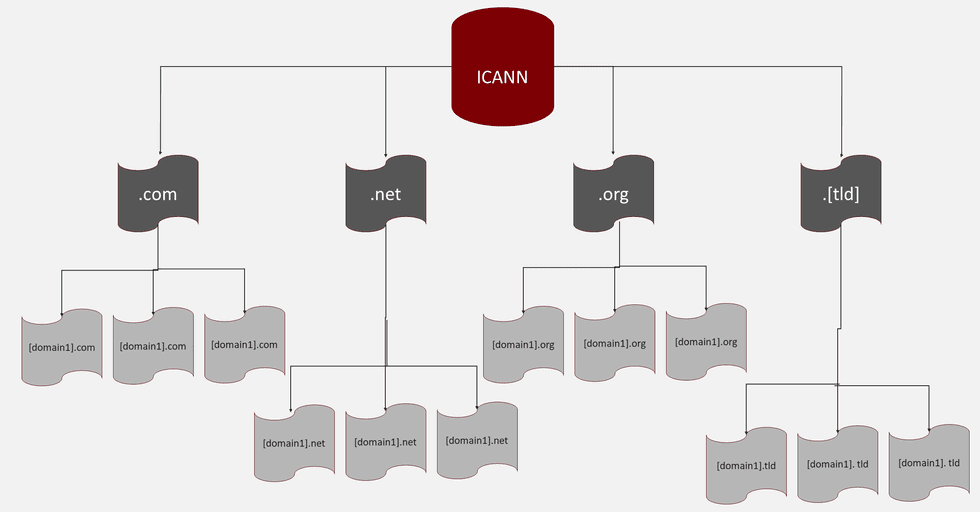
-ICANN and Domain Tree Structure
Some Common TLDs
- COM (originally intended for US business, has become the defacto top level domain)
- NET
- ORG (for non-profit organizations)
- EDU (educational institutions)
- GOV (governments)
- Country Specific (US, UK, CA, AU, IN, EU, etc.)
These core domain extensions have been around since the mid-80s, give or take, back when the Internet was called ARPANET. Things have expanded since then. There are hundreds of top-level domain extensions available today.
What TLDs exist is decided by the Internet Corporation for Assigned Names and Numbers (ICANN). After much deliberation, ICANN decided in 2008 to expand the number of generic TLDs, and later in 2011 began the process of accepting applications for new domains.
While there is no technical limit to the number of TLDs that can be created, there may be a political one. Governments around the world were increasingly seeking a say over what new TLDs will and will not be allowed.
Much of ICANN’s work has concerned the Internet's global Domain Name System (DNS), including policy development for internationalization of the DNS system, introduction of new generic top-level domains (TLDs), and the operation of root name servers. The numbering facilities ICANN manages include the Internet Protocol address spaces for IPv4 and IPv6, and assignment of address blocks to regional Internet registries. ICANN also maintains registries of Internet Protocol identifiers.
Domain names:
Domain name is the address of your website that people type in the browser URL bar to visit your website. In simple terms, if your website was a house, then your domain name will be its address.
A more detailed explanation:
The Internet is a giant network of computers connected to each other through a global network of cables. Each computer on this network can communicate with other computers.
To identify them, each computer is assigned an IP address. It is a series of numbers that identify a particular computer on the internet. A typical IP address looks like this: 66.249.66.1
Now an IP address like this is quite difficult to remember. Imagine if you had to use such numbers to visit your favorite websites.
Domain names were invented to solve this problem. Now if you want to visit a website, then you do not need to enter a long string of numbers. Instead, you can visit it by typing an easy to remember domain name in your browser’s address bar. For example, amazon.com.
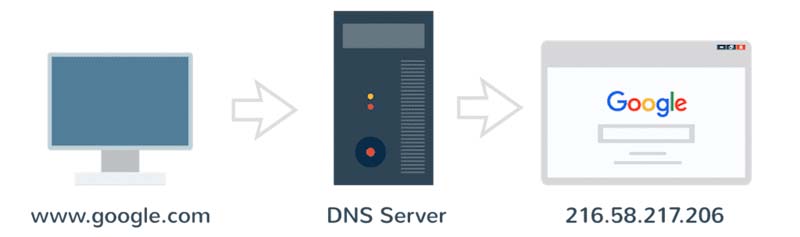
-DNS and IP addresses are the phone book of the Web.
Domain Name Structure
An Internet address is composed of a protocol, like https:// and the domain. The domain itself is composed of a top-level domain, like .com, the domain you can purchase and any sub-domain you may have provisioned.
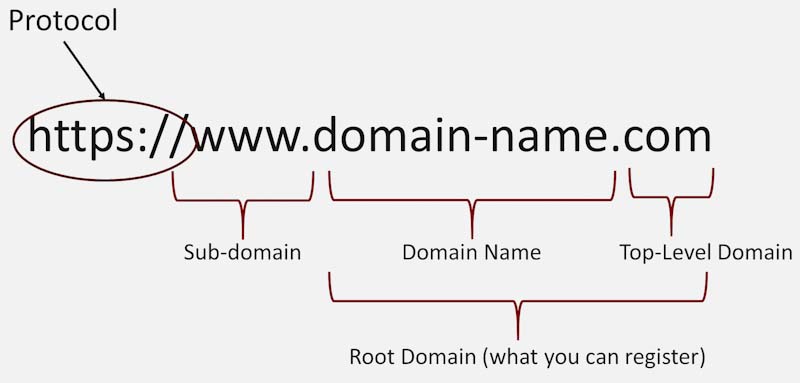
-It starts with the machine or host name (such as “www” to indicate “world wide web”), followed by the name of the website itself, and finally the TLD (like .com or . gov). Each part of the domain is separated by a dot, creating a fully qualified domain name (FQDN)
Are Domains Only for Websites?
To most of us we associate domain names with websites. But that is only a small part of their functionality. They can map to a website, which is a service running on a server. But they also map to other services, like e-mail, FTP, messaging, and hundreds of other services mapped to protocols and ports on servers.
Like WWW there are other common sub-domains we commonly use as defector standards to map to some of these services. You may see domains like pop.domain.com and smtp.domain.com for e-mail protocols, etc.